Infrastructure Installation That Supports Future Development
Dry Utility Installation in Waldorf, Prince Frederick, and California for developments requiring underground conduit and telecommunications infrastructure
R&R Scapes and Maintenance handles dry utility installation for contractors and developers preparing sites for electrical conduit, telecommunications lines, and fiber networks in Waldorf, Prince Frederick, and California. If your project timeline depends on getting utilities installed before construction progresses, delays in trenching or conduit placement can set back every phase that follows. Coordinating underground work with grading and drainage requires crews who understand site sequencing and know how to protect infrastructure once it is buried.
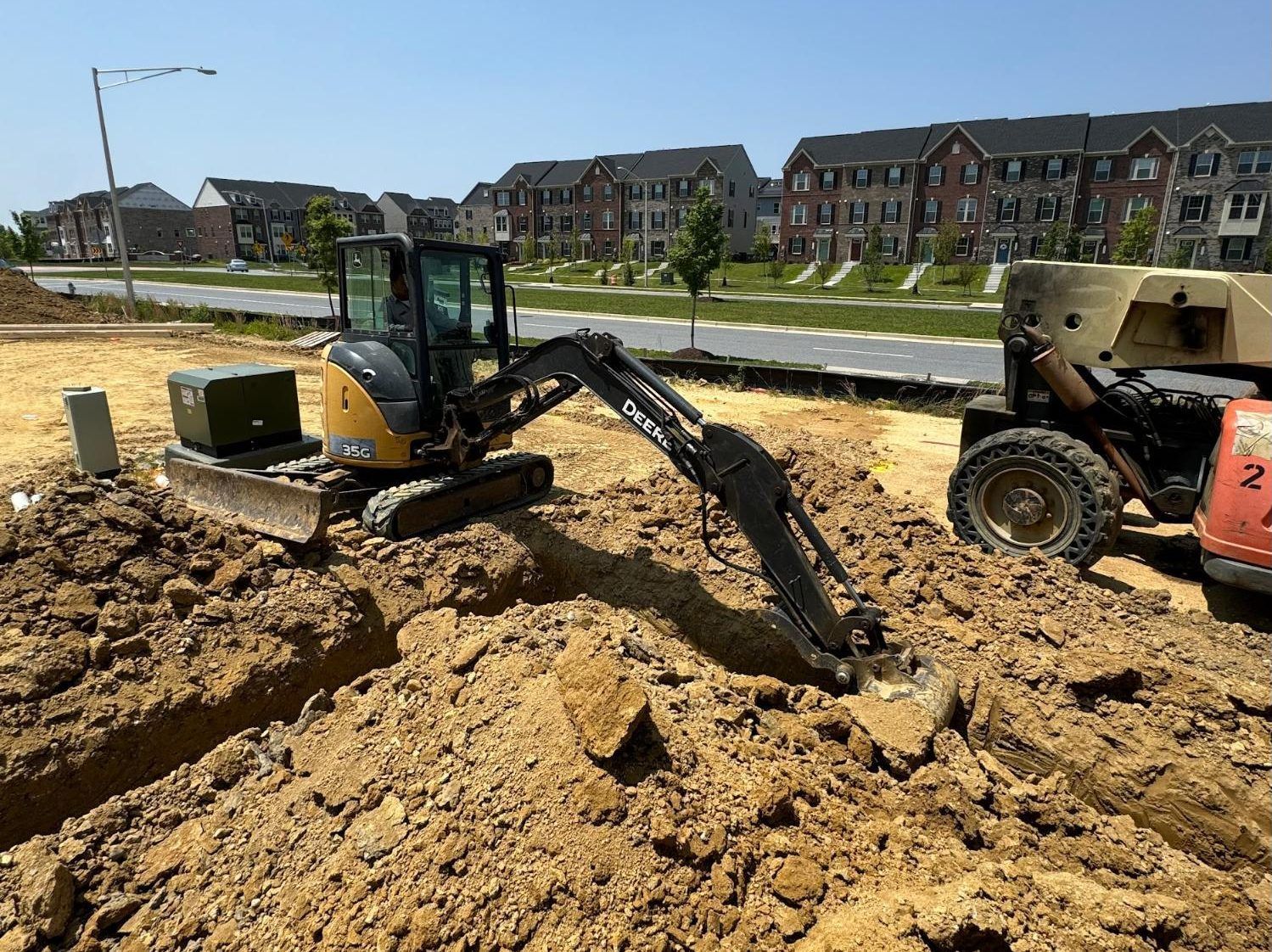
This work involves trenching to proper depths, placing conduit according to specifications, and ensuring lines remain protected while allowing access for future maintenance. Excavation crews use equipment suited to the soil conditions and project scale, whether trenching along roadways, within building footprints, or across large development parcels. Proper installation prevents damage to conduit during backfilling and keeps utility pathways clear for the electrical, internet, and communication services that will run through them.
Reach out to discuss utility installation timelines and site coordination for your upcoming project in Waldorf, Prince Frederick, and California.
How Utility Trenching Fits Into Site Development
Trenching depths and conduit placement vary depending on utility type, local code requirements, and the location of other underground infrastructure. Crews mark existing utilities, trench to specified depths, and install conduit with bedding material that protects lines from shifting soil and surface loads. You avoid the rework and delays that come from improper depths or conduit that shifts during backfill.
After installation, you will see clearly marked utility pathways, properly compacted trenches, and conduit ready for pull-through by electrical or telecommunications contractors. R&R Scapes and Maintenance coordinates with other site trades to ensure trenching does not interfere with drainage work, foundation preparation, or roadway grading.
The service does not include pulling wire, connecting to service panels, or installing above-ground utility boxes. It focuses on the excavation and conduit placement that must happen before those trades begin their work. Projects move forward when utility infrastructure is completed on schedule and installed to support long-term functionality.
What Developers and Contractors Want to Know
These questions come up frequently during site planning and coordination meetings.
What determines trench depth for different utility types?
Electrical conduit typically requires deeper trenches than telecommunications or fiber lines, and local code may specify additional depth where trenches cross roads or driveways.
How does trenching work around existing utilities?
Crews use hand digging or vacuum excavation near marked utility lines to prevent damage, then transition back to mechanical trenching once the area is clear.
Why is bedding material placed around conduit?
Sand or crushed stone bedding protects conduit from sharp rocks, distributes loads evenly, and prevents shifting during compaction, which reduces the risk of cracking or misalignment.
What happens if soil conditions change during trenching in Waldorf, Prince Frederick, and California?
Sandy or clay-heavy soils may require adjustments to trench width or compaction methods to maintain stability and prevent collapse during backfilling.
When should utility trenching happen relative to other site work?
Trenching typically follows rough grading and drainage installation but precedes final paving and landscaping, allowing conduit to be installed without interfering with finished surfaces.
Contact R&R Scapes and Maintenance to review your utility installation schedule and confirm equipment availability for your project timeline.