Access Solutions Built for Difficult Terrain
Utility Services in Waldorf for construction sites, remote equipment access, and corridor preparation
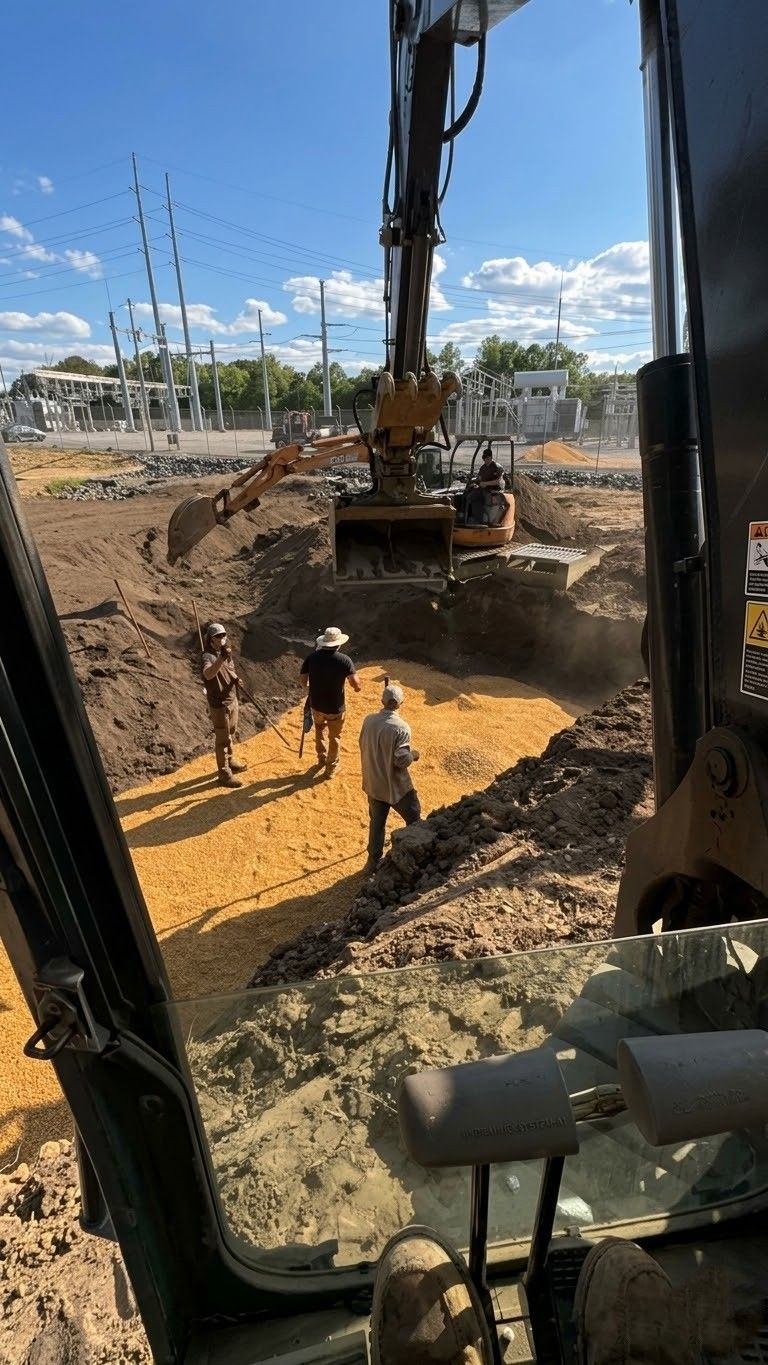
R&R Scapes and Maintenance provides utility services in Waldorf that prepare sites for equipment access, pole installation, and crew movement across uneven or restricted terrain. You need this work when utility lines must cross wetlands, slopes, wooded areas, or ground that cannot support vehicle weight without visible damage or safety risk. The crew installs composite matting over soft soil, grades access roads wide enough for bucket trucks, and clears vegetation from right-of-way corridors so that technicians can reach poles and lines without obstruction.
The service addresses problems that appear when construction or utility crews arrive and find that the planned path to a work site cannot accommodate heavy equipment. Grading corrects uneven approaches that would destabilize lifts or delivery trucks. Composite matting spreads weight across mud, sand, or turf so that treads do not sink or rut the surface. Vegetation removal opens sight lines and eliminates branches that could interfere with boom extension or cable pulls. Right-of-way clearing follows corridor boundaries established by easement documents or utility maps, and the work stops at property lines unless additional authorization exists.
If you are managing a project that requires equipment to move through forest, farmland, or wetland areas in Waldorf, contact R&R Scapes and Maintenance to evaluate site conditions and prepare temporary or permanent access routes.
Site Preparation That Supports Safe Equipment Movement
The crew begins by walking the proposed corridor or access route and marking obstacles such as stumps, boulders, standing water, or slope transitions that exceed the angle tolerance of the machinery scheduled to arrive. You receive a site plan that shows where grading will level transitions, where matting will cover unstable ground, and where trees or brush must be removed to meet clearance width. The plan accounts for turning radius, equipment weight, and the need for staging areas where vehicles can park without blocking the path.
After grading and clearing, you will see a roadway or corridor wide enough for the specified equipment to pass without leaving the prepared zone. Matting remains stable underfoot and does not shift when trucks drive across it. Graded roads drain toward designated low points so that rain does not pool in the travel lane. R&R Scapes and Maintenance marks edges with stakes or flagging so that drivers can identify the safe travel surface, especially in low light or when snow covers the ground.
Additional work may include installing culverts under temporary roads to maintain drainage, placing gravel over matting in high-traffic zones, or widening paths to accommodate outriggers on boom trucks. The service does not include permanent paving, utility pole installation, or electrical work. Matting can be removed after project completion, and graded roads can be restored to original grade if required by permit or landowner agreement.
Common Questions About Utility Site Access
These questions come up when property owners and project managers in Waldorf are coordinating utility work that requires access across unprepared ground.
What type of matting is used for utility access roads?
Composite mats are typically three feet by eight feet, made from high-density polyethylene or similar material, and rated to support tracked or wheeled equipment without cracking or sinking into soft soil.
How wide does an access road need to be for a bucket truck?
Most bucket trucks require a minimum travel width of twelve feet, with additional clearance on each side if the truck will deploy outriggers or if the corridor includes curves that reduce maneuverability.
When is grading necessary before matting installation?
Grading is necessary when the existing surface has ruts deeper than six inches, slopes that exceed ten degrees, or high spots that would leave gaps under the mats and reduce load distribution.
Why does vegetation need to be cleared from utility corridors?
Clearing prevents branches from interfering with boom movement, removes roots that could destabilize matting, and ensures that crews can see overhead lines and underground markers during installation or maintenance.
How long can composite matting remain in place?
Matting can remain in place for months or years depending on traffic volume and environmental exposure, and it can be cleaned, repositioned, or removed without permanent impact to the underlying soil.
R&R Scapes and Maintenance works with utility contractors, construction managers, and landowners throughout Waldorf to prepare sites before crews and equipment arrive. Reach out to review your project timeline and coordinate access planning with the rest of your schedule.